




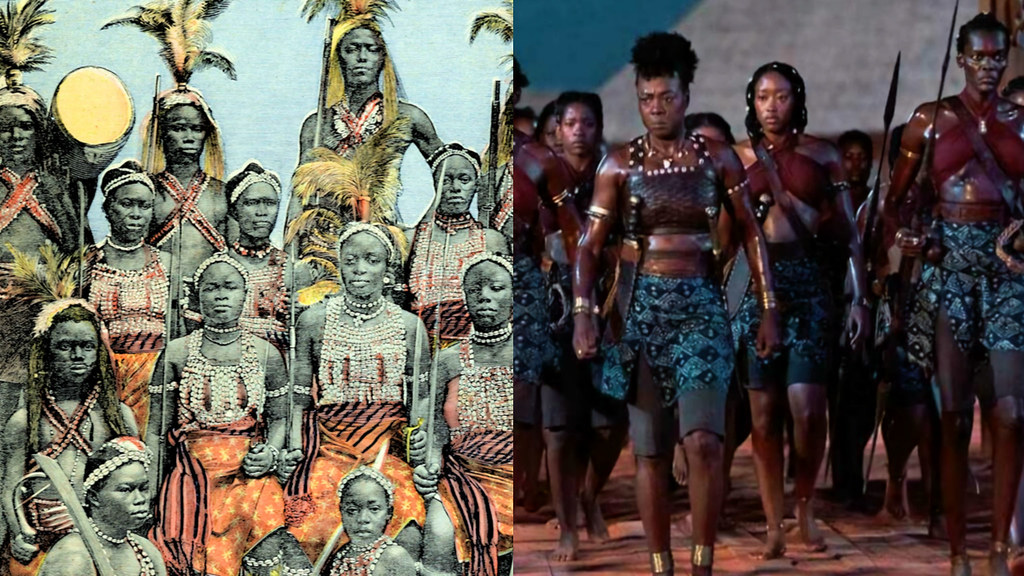
5 Myths about the Agojie in the movie The Woman King.
The recently released Hollywood blockbuster The Woman King depicting the Agojie, which earned an article in this magazine when it was released, supposedly depicts true events from the West African civilization of the Kingdom of Dahomey, which existed from 1600 to 1904.
The film follows the model presented in 2018, with the epic Black Panther, whose success was driven by an almost all black cast and based heavily on African culture.
The film
Set in the 1800s, the film follows the story of the female combat unit called the Agojie. The Agojie were a clan of female warriors who were sworn to defend the Kingdom of Dahomey. Faced with a new threat, General Nanisca is forced to train a new generation of Agojie to fight western invaders who wish to end the Kingdom's way of life and freedom.
While the narrative of this film is quite admirable, the film is far from factual. Since the film's trailer was released, the project has been shrouded in controversy, with many preferring it to be called a work of fiction rather than a story based on real-life events.
Yes, the Agojie existed, and yes, they were a fierce fighting unit praised for their bravery by European settlers, but what they were, in reality, was hardly heroic or empowering, in fact, Dahomey and, by extension, the Agojie actually have a bewildering history.
Therefore, the supposed realities of the film are nothing more than myths embellished by Hollywood that have little or nothing to do with what really happened. We are therefore going to expose here in this article the 5 fundamental aspects portrayed in the film.
The Kingdom of Dahomey
The Kingdom of Dahomey was located in the territory of what is now Benin. It was an African kingdom that flourished between the years 1600 and 1904, when the last King, Beanzim, was defeated by the French and the country was annexed to the French colonial empire.
It emerged around 1600, founded by the Fons who had settled on the Abomei plateau. The founding king of Dahomey was Uebajá (c. 1645-1685) who built the Royal Palaces of Abomei and began to invade and occupy neighboring cities giving rise to the foundation of the kingdom.
For much of the XNUMXth and XNUMXth centuries, the Kingdom of Dahomey was an important regional state, ending its status as a tributary of the Empire of Oyo. It was an important regional power that had an organized domestic economy, based on conquest and slave labor.
The Kingdom of Dahomey was one of the first kingdoms in the world to internationalize the slave trade, maintaining significant contact with Europeans. The administration was centralized, had a tax system and organized armed forces.
One of the most notable facts in the kingdom was the existence of a female military unit called Ahosi, having become known as the “Amazons of Dahomey”.
They were practices elaborate religious forms during the year that culminated in the great festival of the annual Customs of Dahomey that involved large-scale human sacrifices. During this festival, it was customary to exchange prisoners captured during wars and attacks carried out throughout the year.
The Myths of Film
- Anti-Slavery Kingdom:
- Perhaps the most misunderstood fact about the people of Dahomey in the film is their ideals of freedom and the fight against slavery.
- In the film they fought against western invaders who wanted to take away their freedom and impose slavery, but the truth was the opposite, as they fought against French forces who were trying to get the Kingdom of Dahomey to abolish slavery.
- In reality, the people of Dahomey were not only one of the main players in the transatlantic slave trade (they were the ones who internationalized slavery and not the Portuguese, as many people think), but they were also slave owners and practiced capture raids in that the watchword was, submit or be exterminated.
- quick defeat:
- Another exaggerated narrative in the film is the fact that the Agojie fiercely resisted foreign invaders.
- According to recorded history, this is far from being the case, as the Agojie were quickly defeated by the French military.
- The Agojie army consisted of 6.000 soldiers and they were reduced to around 1.200 in a matter of hours to be exact.
- However, it is a fact that they were a major fighting force in the region, as they enjoyed great success for over a century, having stoically resisted the mighty empire of Oío.
- More villains than heroes:
- In reality, the Kingdom of Dahomey was more villainous than heroic. Their practices are the stuff that nightmares are made of.
- In the film, they were portrayed as decent people with a fine way of life, but in reality, they lived by the code of enslave or be enslaved. They were known to burn entire villages to the ground and return home with the decapitated heads and genitals of their enemies, enriching the kingdom through slavery and the slave trade.
- There are reports that they drank the blood of their enemies, performed human sacrifices and enslaved children.
- Nawi's love:
- In the film, the character Nawi, a young Agojie, is portrayed as being in love with a half-Dahomey/half-Portuguese slave trader. This plot point is historically unlikely, as the Agojie were officially the Ahosi (i.e. the king's wives).
- Furthermore, historical accounts point out that Agojie female warriors referred to themselves as men, as such, the story of a romantic adventure between an Agojie and a Westerner seems hard to imagine.
- Nanisca's age:
- A historical account points Nanisca as a teenager and not a middle-aged woman as the film portrays.
- A Western explorer wrote a story in which he once came across a young leader of the Agojie named Nanisca. Perhaps this account was the inspiration for the film version of the character.
What do you think of this Agojie story? Did you know the Kingdom of Dahomey? We want to know your opinion, do not hesitate to comment and if you liked the article, share and give a “like/like”.
Picture: © DR

